
Technology at the service of consumer comfort
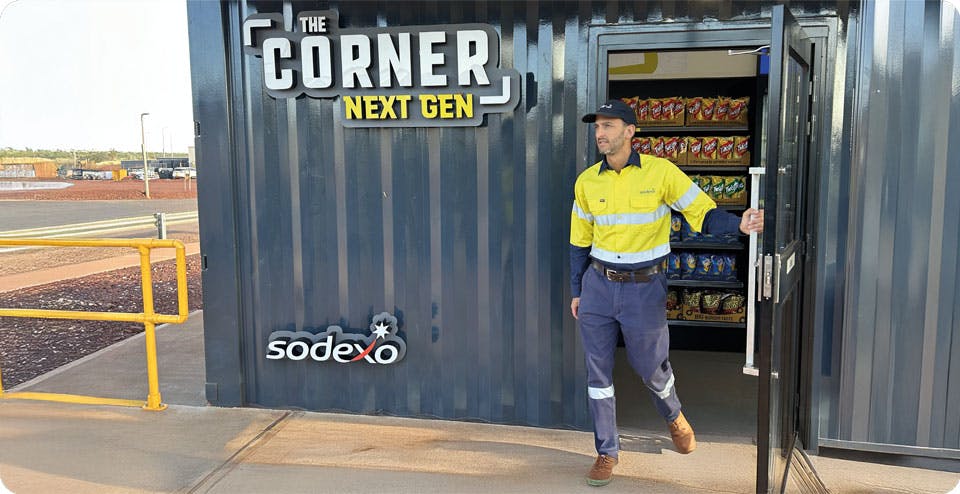
Sodexo continues to innovate by opening Australia’s first autonomous retail store. Designed for “fly-in fly-out” (FIFO) employees at the Rio Tinto Iron Ore Gudai-Darri mining village, the store represents a major step forward in terms of convenience and comfort for those working in extreme environments.
This high-tech store (AiFi) is available 24/7 and is equipped with numerous artificial intelligence-powered sensors.
It can identify products selected by consumers and automatically process payment at the exit, with no checkout and no queuing.
Housed in a portable, air-conditioned shipping container, this pilot store offers more than one hundred items (cold drinks, snacks, etc.) and can serve up to 800 residents and guests in a demanding environment with regular staff rotations.
“Rio Tinto’s most technically advanced mine, Gudai-Darri, is now also home to the mining industry’s first autonomous retail store at its fly-in fly-out village. Providing a range of services and offerings to our workforce is important to ensure they continue to have a great experience while they are in our villages. We are pleased to partner with Sodexo in their industry-first trial of this new retail technology.”
Simplifying and enriching consumer experience
Sodexo is continuing to roll out its digital platform that transforms lunch breaks into a smooth, fast, and personalized experience.
This innovative solution not only meets the need for speed; it offers a personalized experience with recommendations tailored to individual tastes and dietary needs.
Students at Chapman University in the United States can now use a unique App to enhance their on-campus dining experience.
They can browse menus, check ingredients, write reviews, order via mobile or kiosk, use a digital wallet, customize their order, and even use scan-and-go technology.
Sodexo's apps also benefit clients in many ways, including optimized time management, improved point-of-sale flow management, reduced food waste through better order forecasting, and improved overall consumer satisfaction.