
3. IMPACTS RISKS AND OPPORTUNITIES ASSESSMENT
A pre-assessment by relevant internal experts, completed by a final assessment conducted collectively with various technical experts, key impacted functions within the organization as well as representatives of all geographical zones, to ensure point of views' alignment was performed in accordance with CSRD requirements, considering :
- scale, scope and likelihood for impacts as well as irremediable character for negative impacts;
- size of the effect (positive or negative) and likelihood for risks and opportunities.
The scales used for guidance during the materiality assessment have been prepared with internal control, compliance and finance teams, and in accordance with the existing Group risk assessment methodology and evaluation grids:
- for impact materiality: scale, scope and irremediable character (for negative impacts) were assessed separately based on a four-level scale (low, medium, significant, high) to establish the severity score;
- for financial materiality: the size of the potential positive or negative effect was rated on the same four-level scale;
- likelihood was measured as rare, possible, likely or almost certain based on the expected probability of occurrence.
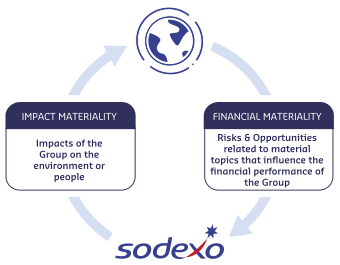
The diagram presents the two types of materiality used to analyze the Group’s impact:
- Impact materiality: Examines the Group’s impacts on the environment and people.
- Financial materiality: Assesses the risks and opportunities related to material issues that affect the Group’s financial performance.
In accordance with CSRD requirements, impacts were assessed on a gross basis, and for impacts related to human rights components, severity took precedence over likelihood. Sodexo made a distinction between actual and potential impacts and considered the following time horizons: short-term (0 to 1 year), medium-term (up to 5 years) and long-term (more than 5 years).
External partners were also consulted as part of the final validation of certain environmental related IROs to ensure consistency with the Science-Based Targets Network (SBTN) step 2 framework.
4. CONSOLIDATION AND VALIDATION
After final review by the CSRD project team to ensure overall consistency and completeness, consolidated results were presented to and validated by the Group Chief Financial Officer, Group General Secretary and Group Chief Sustainability Officer who are the sponsors of the CSRD implementation project. Impact and finance materiality thresholds were set and a total of 35 impacts and 25 risks/opportunities were deemed material. The final results of the double materiality assessment were then presented and validated by the Sodexo Leadership Team and presented to the Board Audit Committee and the Board Sustainability Committee.
Consideration of stakeholders' point of view
Sodexo’s double materiality explicitly integrated stakeholder perspectives:
- internal stakeholders included the CSRD Core Project Team, Group Subject Leads, regional experts and functional representatives from sustainability, risk, supply management, finance, investor relations and internal control. Group Subject Leads and functional teams were engaged from the outset and at every key stage to review and validate the outcomes. Group and regional experts contributed through dedicated workshops, bringing technical expertise on specific topics and ensuring comprehensive geographical and business coverage. Collectively, they played a central role in identifying relevant subject matters, compiling the list of impacts, risks, and opportunities (IROs), and assessing their materiality;
- employee representatives were formally consulted twice: first at DMA design stage and again for validation;
- external stakeholders, including WWF and independent experts in sustainability contributed to the validation of environment-related IROs, ensuring alignment with the Science-Based Targets Network (SBTN) Step 2 framework.
The double materiality assessment has been designed as an iterative process. Sodexo will refine the assessment in line with evolving regulation, best practice, and stakeholder expectations.