
Disclosure requirements in ESRS covered in sustainability statement [IRO-2]
Double materiality assessment outcome:
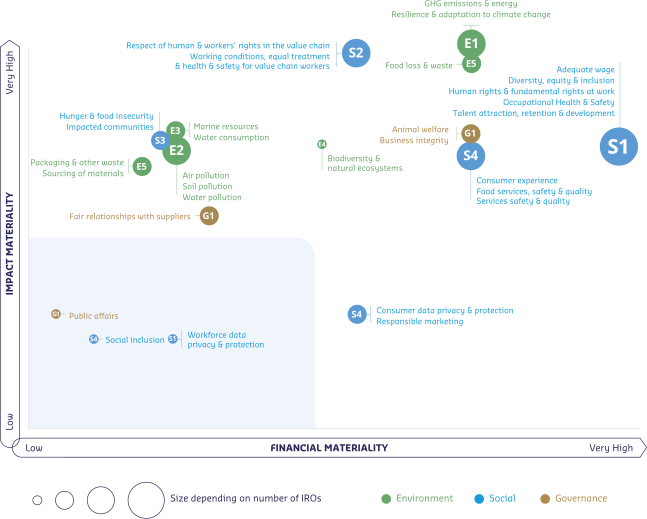
This image shows a diagram of the ESRS disclosure requirements covered in the sustainability statement (IR02), based on the double-materiality analysis.
Impact materiality (impact on environment, social, and governance)
Environment
- E1: GHG emissions & energy; climate-change resilience and adaptation — very high.
- E2: Air pollution; soil pollution; water pollution — high.
- E3: Marine resources; water consumption — high.
- E4: Biodiversity and natural ecosystems — high.
- E5: Packaging and other waste; procurement — high.
- E5: Food losses and food waste — very high.
Social
- S1: Living wages; diversity, equity & inclusion; human rights and fundamental labor rights; occupational health & safety; attraction, retention & talent development — very high.
- S1: Employee data privacy and protection — low.
- S2: Respect for human and worker rights in the value chain; working conditions; equal treatment; health & safety of value-chain workers — very high.
- S3: Hunger and food insecurity; impacted communities — high.
- S4: Social inclusion — low.
- S4: Consumer data privacy and protection; responsible marketing — low.
- S4: Customer experience; safety and quality of Food Services; safety and quality of services — high.
Governance
- G1: Animal welfare; business integrity — high.
- G1: Fair relations with suppliers — medium.
- G1: Public affairs — low.
Financial materiality (risks and opportunities affecting financial performance)
Environment
- E1: GHG emissions & energy; climate-change resilience and adaptation — high.
- E2: Air pollution; soil pollution; water pollution — medium.
- E3: Marine resources; water consumption — medium.
- E4: Biodiversity and natural ecosystems — medium.
- E5: Packaging and other waste; procurement — low.
- E5: Food losses and food waste — high.
Social
- S1: Living wages; diversity, equity & inclusion; human rights and fundamental labor rights; occupational health & safety; attraction, retention & talent development — very high.
- S1: Employee data privacy and protection — low.
- S2: Respect for human and worker rights in the value chain; working conditions; equal treatment; health & safety of value-chain workers — medium.
- S3: Hunger and food insecurity; impacted communities — low.
- S4: Social inclusion — low.
- S4: Consumer data privacy and protection; responsible marketing — low.
- S4: Customer experience; safety and quality of Food Services; safety and quality of services — high.
Governance
- G1: Animal welfare; business integrity — high.
- G1: Fair relations with suppliers — medium.
- G1: Public affairs — low.
Material impacts, risks and opportunities and their interaction with strategy and business model [SBM-3]
The results of Sodexo’s double materiality assessment highlight that its most material impacts, risks and opportunities are closely linked to the nature of its business model as a global food services and FM provider operating on client sites. Material impacts identified relate primarily to climate change (notably Scope 3 GHG emissions embedded in the food value chain), biodiversity and water use associated with agricultural sourcing, food waste, human rights and working conditions across the supply chain, as well as the health and well-being of consumers and employees.
Compared to the previous assessments, the 2025 analysis revealed new or elevated material topics, including water and adequate wage, which have emerged as highly material given their relevance to both environmental sustainability and social equity. Fundamental rights at work, as well as talent attraction, retention, and development, also feature prominently, reflecting their critical role in sustaining Sodexo’s people-centered business model.
From a financial perspective, Sodexo’s most material risks and opportunities include exposure to evolving climate and social regulations, shifts in consumer expectations toward healthier and more sustainable diets, supply chain disruptions, and growth opportunities arising from low-carbon, plant-based, and waste reduction solutions.
These findings directly inform Sodexo’s strategic priorities and Better Tomorrow 2028 Sustainability roadmap, structured around four transformation drivers: a sustainable supply chain, low-carbon meals, responsible energy use, and the fight against food waste. By embedding material sustainability issues into its strategy, Sodexo strengthens its ability to anticipate risks, capture opportunities and enhance resilience across its value chain. This alignment also ensures that Sodexo’s sustainability commitments are not separate from its core business model, but actively shape its service offerings, supplier engagement and client partnerships.